

Just about every golfer, at some point, experiences mental noise, tension, or inconsistency. It’s part of the game. But if it starts to happen more often or becomes harder to shake, it may be worth understanding what’s driving it.
What may be happening underneath the surface
When stress, pressure, and life demands build up, the brain and nervous system can shift into a more controlled, protective mode. In the short term, this response is both intelligent and adaptive and can help maintain stability and function. But sometimes the system does not fully shift back out of that state, and over time it can settle into a tighter, more over-controlled pattern — often without conscious awareness. When that happens, the feeling that “something is off” can become more persistent and begin to interfere with how you play.
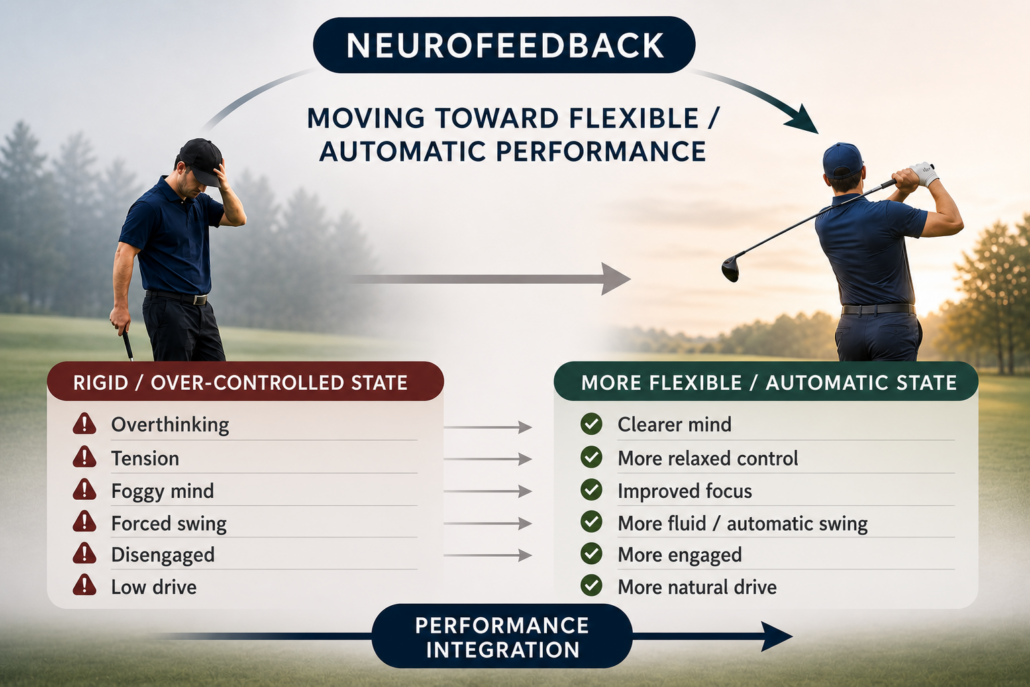

How Neurofeedback Can Help
Neurofeedback is a technology-driven training approach that uses sensors placed on the scalp to:
• Monitor brain activity in real time
• Deliver feedback designed to support more flexible and efficient function
Think of it less as “trying harder” and more as helping the system get out of its own way.
QEEG brain mapping is used as part of the process to better understand patterns of brain activity and regulation. Combined with an understanding of your experiences, patterns, and challenges, it helps guide the neurofeedback process and the selection of methods and protocols that may best support more flexible and efficient functioning, especially under stress and pressure.
The goal is not to create a perfect brain or force a specific state, but to help reduce internal interference so your natural ability can show up more consistently, both on and off the course.